 Sardines
Japan: The Other Sardine Culture
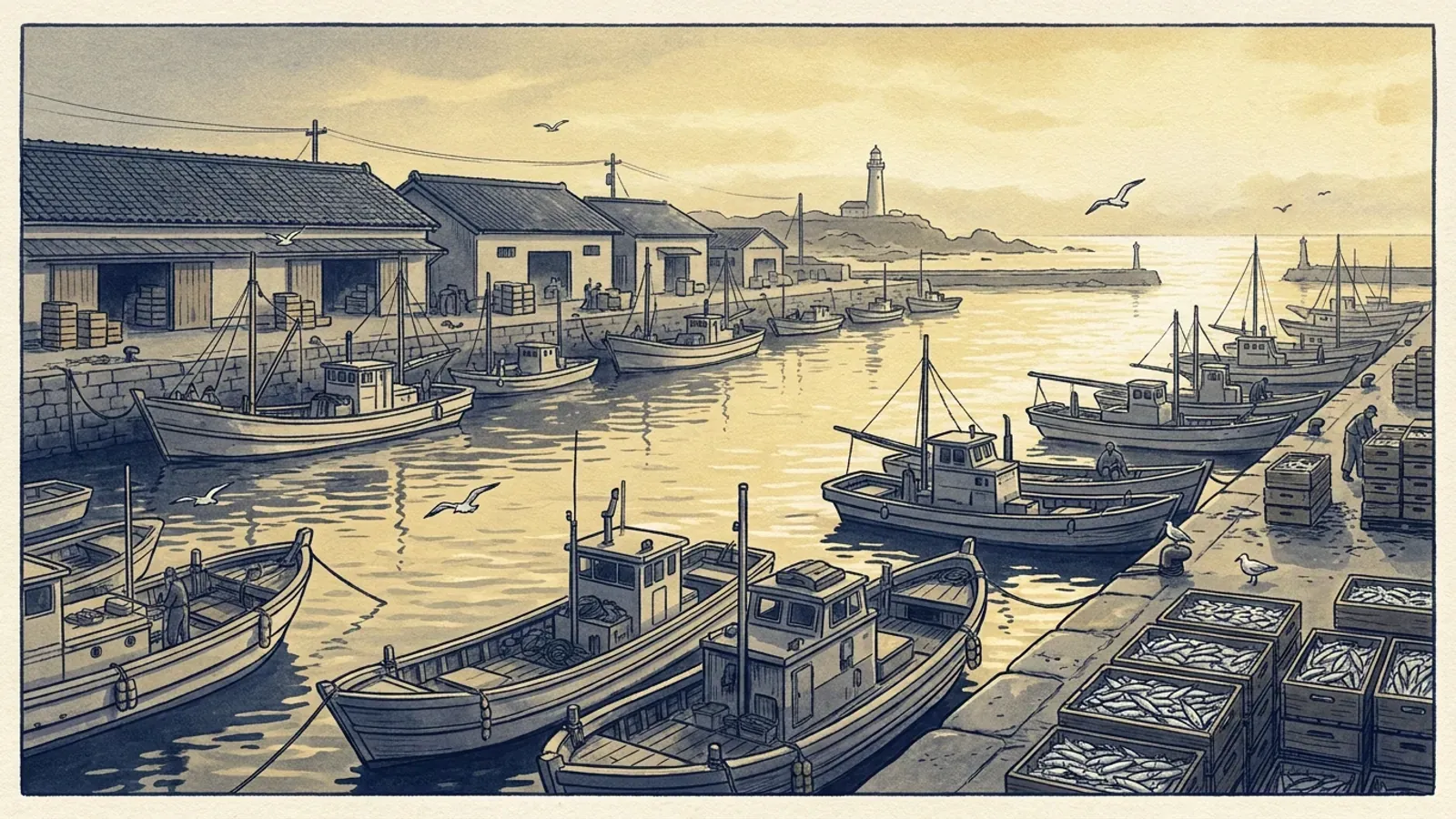
Every guide to canned sardines tells the same story: Brittany invented the tin, Portugal perfected it, olive oil is the measure of all things. That story is true. It is also half the world. The other half is Japan — which eats, cans, and thinks about sardines in ways the olive-oil tradition never imagined.
If the European tin is about preserving a fish at its simplest, the Japanese tin is about cooking one. Same fish, opposite philosophy — and Western tinned-fish media almost completely ignores it.
First, the fish
The Japanese sardine is Sardinops melanostictus — ma-iwashi, "the true iwashi" — a Pacific cousin of the Sardinops that fills Mexican and (historically) Californian cans. One caution before you buy: "iwashi" (イワシ) on a Japanese label covers three different fish. Ma-iwashi is the sardine; urume-iwashi is a round herring; katakuchi-iwashi is an anchovy. A canned "iwashi" product is usually — but not automatically — the sardine. The better producers name the species.
The flavor grammar
Here's what makes the Japanese sardine aisle feel like another planet. Where a European tin asks "which oil?", a Japanese tin asks "which preparation?":
Kabayaki (蒲焼) — the eel treatment applied to sardines: fillets grilled or roasted, then glazed in a sweet soy-mirin sauce. The single most popular canned-iwashi style; one Chōshi canner claims to have originated the format in the 1920s–30s.
Ume-ni (梅煮) — sardines simmered with umeboshi, the salted sour plum. The acidity does what lemon does in the West, but deeper — it's a home-cooking preparation faithfully transferred into a can.
Miso-ni (味噌煮) — braised in miso, the sardine's oiliness against fermented soy. The mackerel version is a Japanese pantry cliché; the sardine version is arguably better.
Mizuni (水煮) — plain salt-and-water boil. The purist's tin and the cook's ingredient, closer to a European "au naturel" than anything else in the lineup.
Plus modern riffs — lemon mizuni, tomato "paccheri" styles, ajillo — because the category is alive and still inventing.
Who makes them
The supermarket floor belongs to the giants: Maruha Nichiro (roots to 1880), Nissui (1911), Kyokuyo (16+ iwashi SKUs in its own online store), Hagoromo. Between them they cover every preparation above at pocket-money prices, often with EPA/DHA content printed bigger than the brand name — in Japan the sardine can is sold as functional food as much as lunch.
The soul of the category, though, lives in Chōshi, the fishing port east of Tokyo that is to Japanese sardine canning roughly what Douarnenez is to French. Shida Kanzume (canning there since about 1905) runs a line of never-frozen "fresh raw material" tins. Tawara Kanzume, under its ちょうした (Chōshita) label since 1929, is the house that claims the canned kabayaki format itself.
And then there are the artisans that map directly onto what a European conservas collector already understands. Takenaka Kanzume in Miyazu, on the Sea of Japan side, has hand-packed its Tenkyo-brand oil sardines since 1908 — ma-iwashi in cottonseed oil with a bay leaf, ¥1,100 a tin, routinely the top pick in Japanese oil-sardine rankings alongside Chiba Sanchoku Service's additive-free Chōshi tins. A hand-packed 1908 oil sardine is a sentence any Nuri devotee can parse instantly. The traditions are not so far apart; they just stopped talking to each other.
The boom, and the wobble
Japan's sardine story runs on the same brutal Pacific population cycles as everywhere else — the 1980s ma-iwashi boom was one of history's great fisheries, the 1990s crash equally dramatic. The fish has been recovering for a decade, and a 2018 canned-iwashi boom (production up ~65% at one major) made the sardine can fashionable again, riding the health data.
But the cycle never sleeps. In 2026 the supply is wobbling again: one Chōshi-adjacent canner suspended its entire winter-sardine line this January, and Maruha Nichiro quietly discontinued one of the category's iconic SKUs. If you want to explore this world, the tins are easier to find than they may be in a few years.
Where to start
If you see them at a Japanese grocery abroad (or online): a kabayaki tin from any of the majors for the flavor experience; a mizuni for cooking; and if you find Takenaka's oil sardines, buy two — one for now, one for the shelf. Eat the bones, naturally. Japan never doubted that part.
Same fish, opposite philosophy: the European tin preserves a sardine; the Japanese tin cooks one.
Sources
- Maruha Nichiro product pages (incl. the 月花 discontinuation notice)
- Nissui product pages (EPA/DHA marketing)
- Kyokuyo online store — iwashi collection
- Shida Kanzume and Tawara Kanzume (Chōshita) official sites
- Takagi Shoten — winter-sardine suspension notice (2026-01-15)
- Takenaka Kanzume (Tenkyo) official site + retail listings; Chiba Sanchoku Service company pages
- KATI — coverage of the 2018 canned-iwashi boom
- Sardines.World — our own Japan brand + species (ma-iwashi) directory research
Frequently asked questions
What species are Japanese canned sardines?
Usually ma-iwashi, Sardinops melanostictus — a true sardine of the Pacific Sardinops genus. But "iwashi" on a label can also mean round herring or anchovy; better producers name the exact fish.
What is kabayaki-style sardine?
The sweet soy-mirin glaze treatment traditionally used for grilled eel, applied to sardine fillets — Japan's most popular canned-sardine preparation.
Are Japanese canned sardines available outside Japan?
Yes — the majors (Maruha Nichiro, Nissui, Kyokuyo) export to Japanese and Asian groceries worldwide, and specialist tins appear at Japanese online retailers that ship internationally.
Are sardines healthy by Japanese standards too?
Japanese cans often print EPA/DHA content on the front — one Nissui kabayaki tin advertises 1,700mg EPA. The health framing that recently made sardines trend in the West has been standard in Japan for decades.