 Sardines
Fresh Sardines: How to Buy, Clean and Cook Them
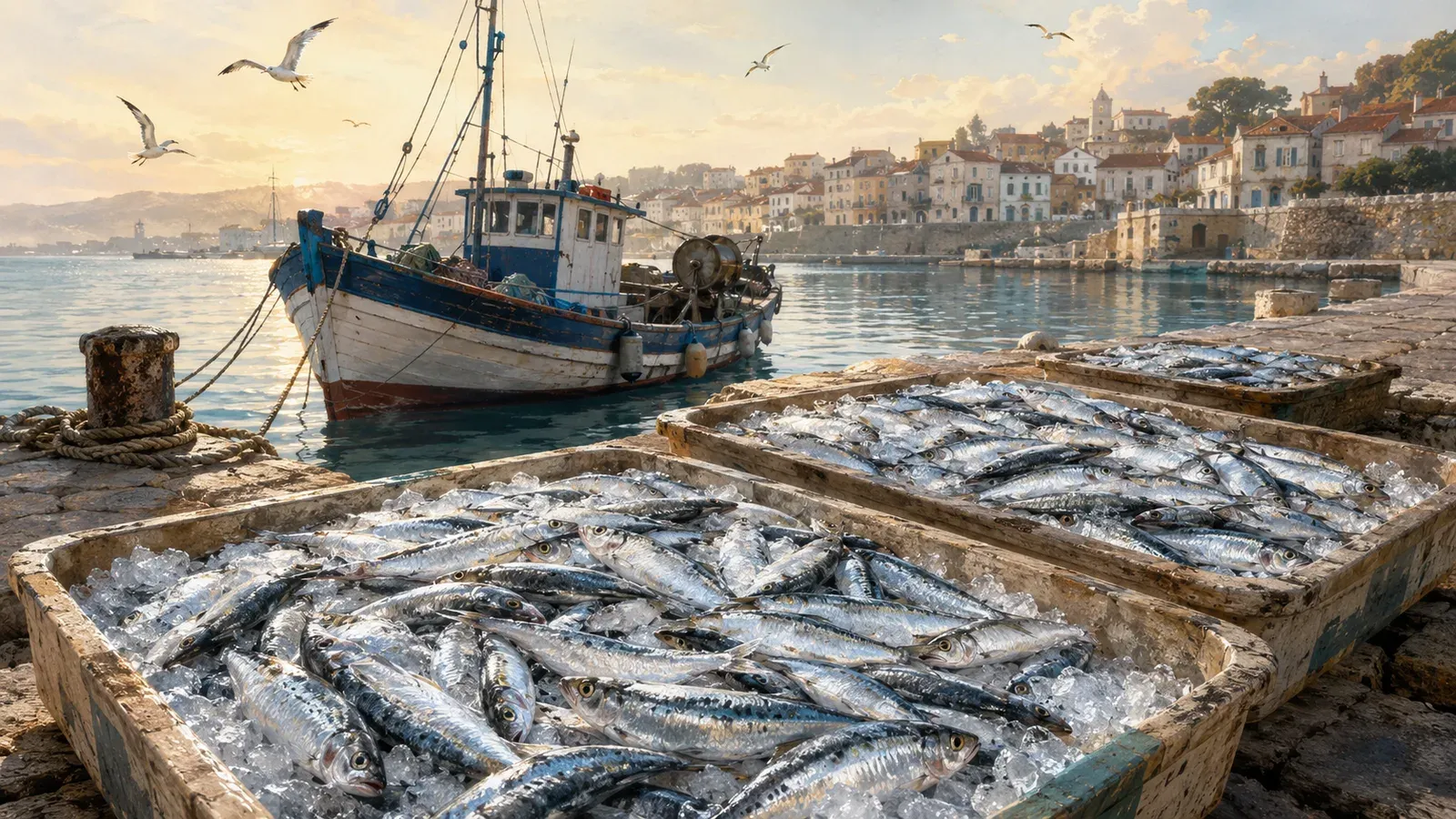
Buying fresh sardines comes down to four checks you can do in five seconds: eyes clear and bright, skin shining like foil, flesh firm enough to spring back, and a smell of sea rather than fish. Buy them the day they land, cook them the same day, and keep the cooking almost insultingly simple — salt, high heat, maybe a squeeze of lemon. This guide covers when and where to find them, how to clean them with nothing but your hands, and what the tin does better.
Most of this site is about sardines in a can, and we stand by every tin. But the can is the second act. Every great sardine culture — Portugal, Andalusia, Brittany, Japan — is built on the fresh fish, and once you have eaten a just-landed sardine grilled over coals, the whole directory makes more sense. This is the page for that first act.
When sardines are in season
Sardines are a seasonal fish in a way supermarket salmon never is. In the Atlantic off Portugal and northern Spain, the season opens in late spring and runs to October, and the fish transform across it: lean and modest in May, then progressively fatter through the summer as they feed, hitting their peak in June through August. That peak is why Lisbon's Santo António festival in mid-June smells entirely of sardine smoke, and why a Portuguese rule of thumb says the sardine is best "when there is no R in the month."
The fat is the whole point. A midsummer Atlantic sardine carries dramatically more oil than a spring one, and that oil is what bastes the fish from inside on a grill, crisps the skin, and carries the flavour. Buy the same fish in early May and in late July and you will struggle to believe it is one species.
Seasons also close without much warning. Quotas are set annually, and fleets can exhaust them early — Spain's northern purse-seine fleet shut down for the year on the first of August in 2026 with its quota fished out, leaving Portugal to fish the peak alone. Our seasons page carries a weekly-updated line on what is running right now, so check it before you build a menu around fresh fish.
How to buy them: the five-second checks
Sardines are an oily fish, and oil goes rancid fast — a sardine is at its best for a startlingly short window, which is why the fish counter matters more here than for almost any other purchase.
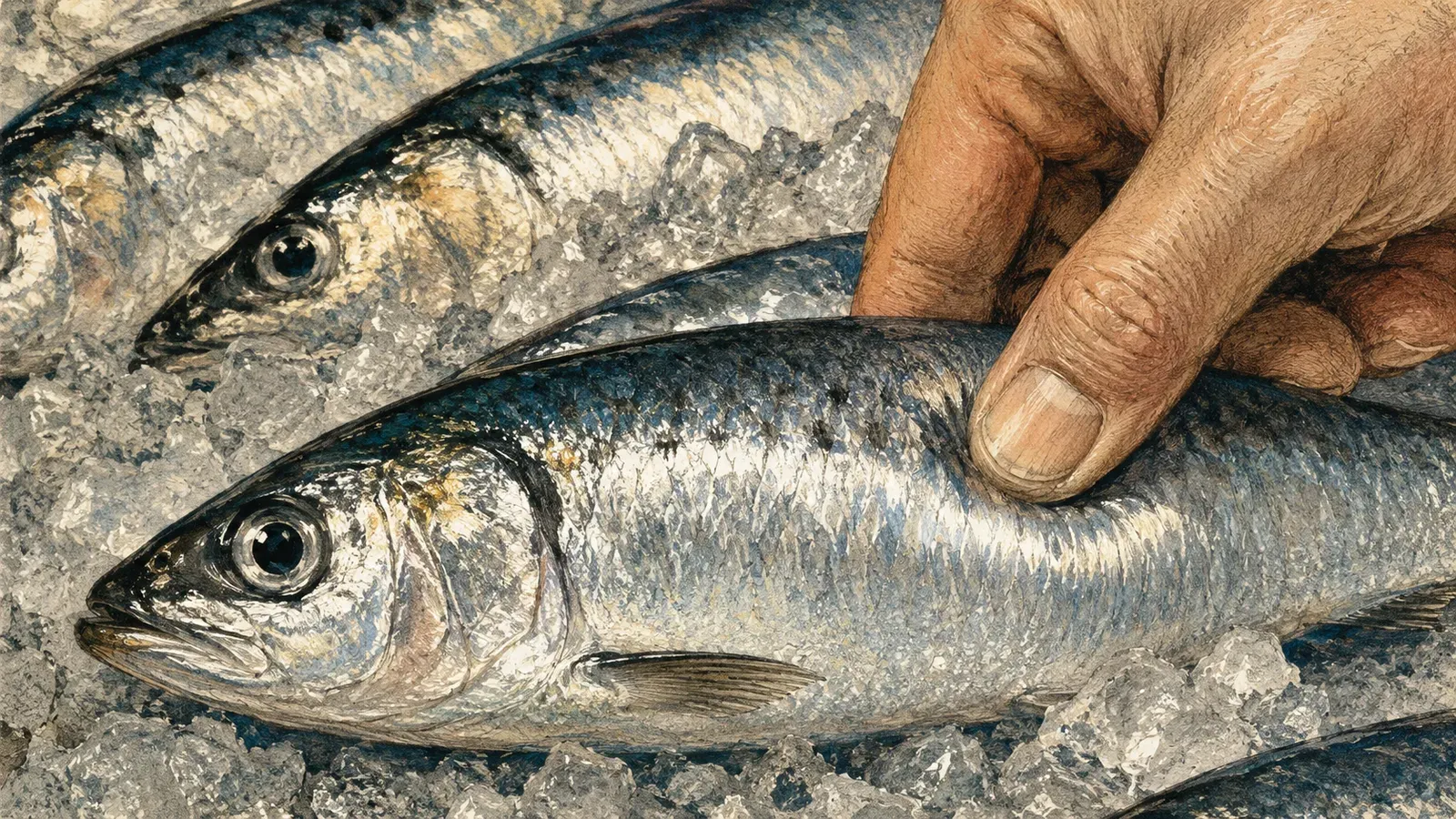
Run the checks in this order. Eyes: clear, bright, gently convex. A cloudy or sunken eye is the single most reliable sign of a fish past its window. Skin: it should gleam, silver-blue and metallic, as if lacquered; dull, dry or yellowing skin means age. Flesh: press gently — it should feel firm and spring back rather than hold a dent. Gills: lift a gill cover if the fishmonger lets you; bright red is fresh, brownish is not. Smell: clean, briny, like the sea at low tide. The word "fishy" should never apply.
Then ask one question: when did these land? At a proper market the answer is "this morning." Sardines do not improve with a second day, and a good fishmonger will say so.
Cleaning them with your hands
Here is the pleasant surprise: sardines are one of the few fish you can clean entirely without a knife, and it takes under a minute each once you have the knack.
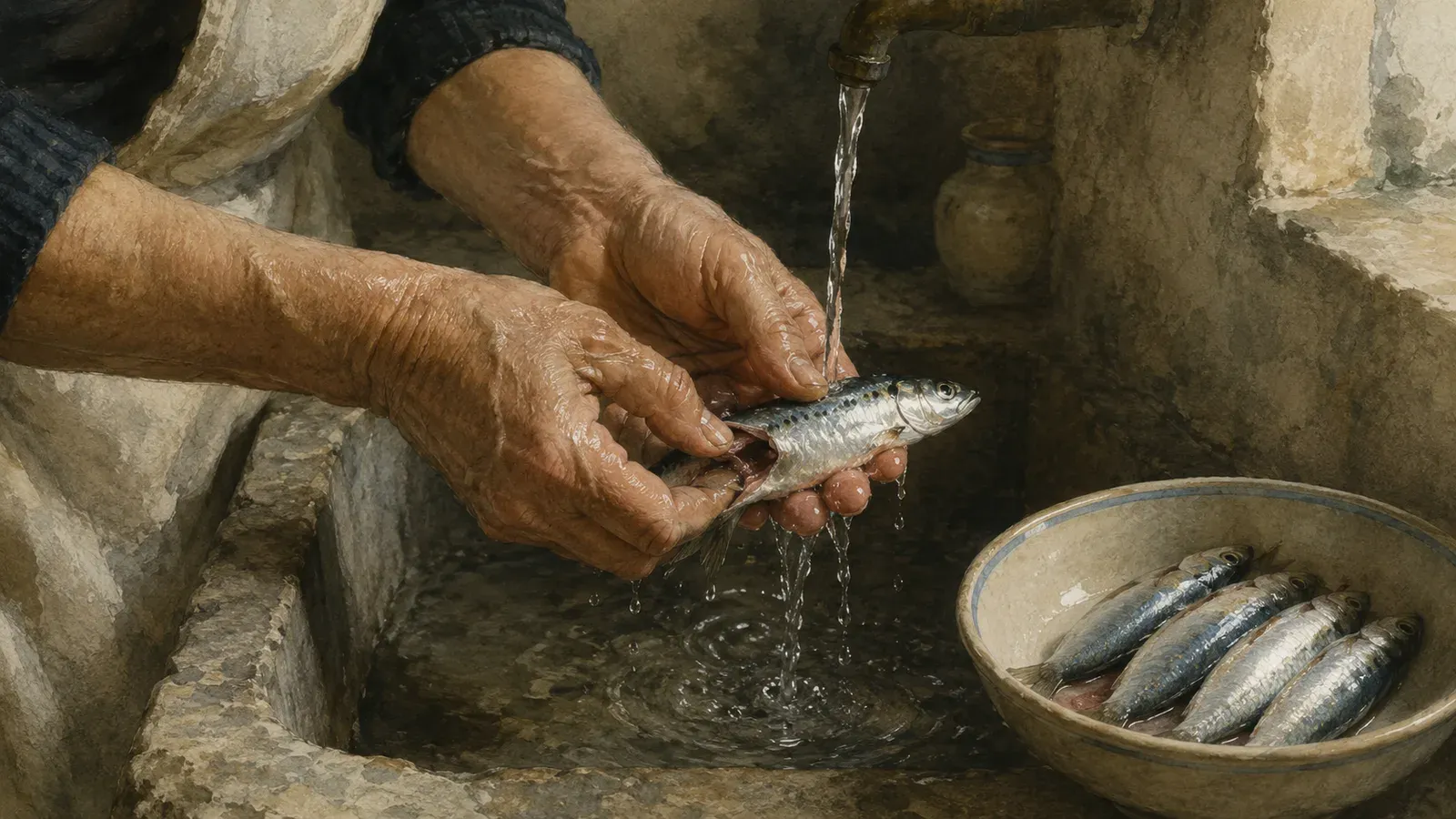
Scale them first — under a thin stream of cold water, run your thumb from tail to head against the grain and the delicate scales slide straight off. To gut, press your thumbnail into the belly at the vent and run it forward to open the cavity, then pull the head gently away from the body: the innards come away with it in one motion. Rinse the cavity, pat dry, done. If you would rather not use your thumbnail, kitchen scissors do the same job — snip the belly, snip behind the head, sweep the cavity clean.
For recipes that want a flat, boneless fish — sarde in saor, stuffed sardines, a pan-fry — keep going: open the gutted fish like a book, press your thumb flat along the spine from inside, and the backbone lifts out whole, tail to head. No filleting knife ever touches a sardine in most of the kitchens that cook them best.
One honourable exception to all this effort: if you are grilling whole in the Iberian style, tradition says do not gut them at all. A genuinely fresh, fat summer sardine goes onto the grill exactly as it left the sea, heavily salted, and the question of innards resolves itself on the plate, where the skin and its contents lift away together.
Espetos: the world's best way to cook a sardine
On the beaches of Málaga they have spent a century and a half perfecting fresh sardine cookery, and the answer they arrived at is six fish on a sharpened cane, angled over an olive-wood fire built in a beached boat filled with sand. The espeto — the skewer — is its own profession there; a good espetero reads the wind, angles the cane so flame never touches fish, and serves nothing but salt, smoke and sardine. The tradition reaches back to the 1880s beach bars of El Palo, and the story locals tell is that King Alfonso XII himself was corrected by an espetero for trying to eat one with cutlery: fingers, always.

You do not need a boat full of sand to borrow the principles, because they are universal: the fattest fish you can find, salted generously with coarse sea salt an hour ahead, cooked whole over serious heat, near smoke but not in flame, and eaten immediately with your hands. On a home grill that means the coals at full glow, three to four minutes a side until the skin blisters and crackles, and no sauce beyond a lemon half. The Portuguese add one refinement worth stealing: serve each sardine on a slice of rustic bread, which catches the dripping fat and becomes, by consensus, the best part of the meal.
Fresh versus the tin
So should the tins in your cupboard feel threatened? No — and the reasons are worth knowing, because fresh and canned are not competing products so much as two different foods made from the same fish.
Fresh wins on texture, ceremony and sodium — a grilled sardine is juicier, crisper and less salty than anything from a can. But the tin wins one category outright: calcium. Canning pressure-cooks the bones soft enough to eat whole, and eating the bones is the entire trick — a single tin delivers roughly a third of a day's calcium, while a fresh sardine, with bones lifted out or left on the plate, delivers close to none. Omega-3s are abundant either way, and because canning locks the fish in at peak freshness, the tin holds its peak-season nutrition year-round in a way the fish counter cannot in February.
The practical rule we live by: fresh in season, tins the rest of the year — which is, not coincidentally, exactly how Portugal has eaten for a century.
The espeto rule travels: fat fish, coarse salt, fierce heat, no cutlery. Everything else is decoration.
Sources & further reading
- Tasting Table — how to buy fresh sardines (skin, eyes, firmness)
- Daily Meal — choosing the best fresh sardines
- Saveur — how to clean and fillet sardines by hand
- Daily Meal — the scissors method for cleaning sardines
- Visita Costa del Sol — history of the espeto
- Andalucia.com — the espeto tradition
- Taste of Lisboa — the sardine in Portuguese summer
- Consum — sardine seasonality
- Nutrition Advance — sardine nutrition (calcium from bones)
- The Fishing Daily — Spain's 2026 sardine quota closure (Aug 1)
Frequently asked questions
How do you know if sardines are fresh?
Look at the eyes first: clear, bright and slightly bulging means fresh; cloudy or sunken means walk away. The skin should shine like polished metal, the flesh should feel firm and spring back when pressed, the gills should be bright red, and the fish should smell of the sea rather than of fish.
When is sardine season?
In the Atlantic off Portugal and Spain, the season runs roughly May to October, with the fattest, most flavourful fish in midsummer. The Mediterranean peaks across the same summer months. Exact opening and closing dates shift each year with quotas, so check locally: individual fisheries can close early.
Do you need to gut sardines before grilling?
Not necessarily. The Portuguese and Andalusian tradition is to grill sardines whole and ungutted, heavily salted, over hot coals; the innards of a truly fresh summer sardine stay contained and the salt-crisped skin peels away with them. If that is a step too far, gutting takes seconds by hand and the fish grills just as well.
Are fresh sardines better than canned?
They are different, not better. Fresh sardines win on texture and drama off the grill and carry less salt. Canned sardines actually win on calcium, because the canning process softens the bones so you eat them — a tin can deliver around a third of your daily calcium. Omega-3 levels are excellent in both.
What do fresh sardines taste like?
Rich, savoury and clean, closer to mackerel than to white fish, with crisp skin and juicy flesh when grilled. A fat midsummer sardine tastes noticeably fuller than an early-season one, which is why the grilling festivals cluster in June, July and August.