 Sardines
Is Your Sardine Actually a Sardine?
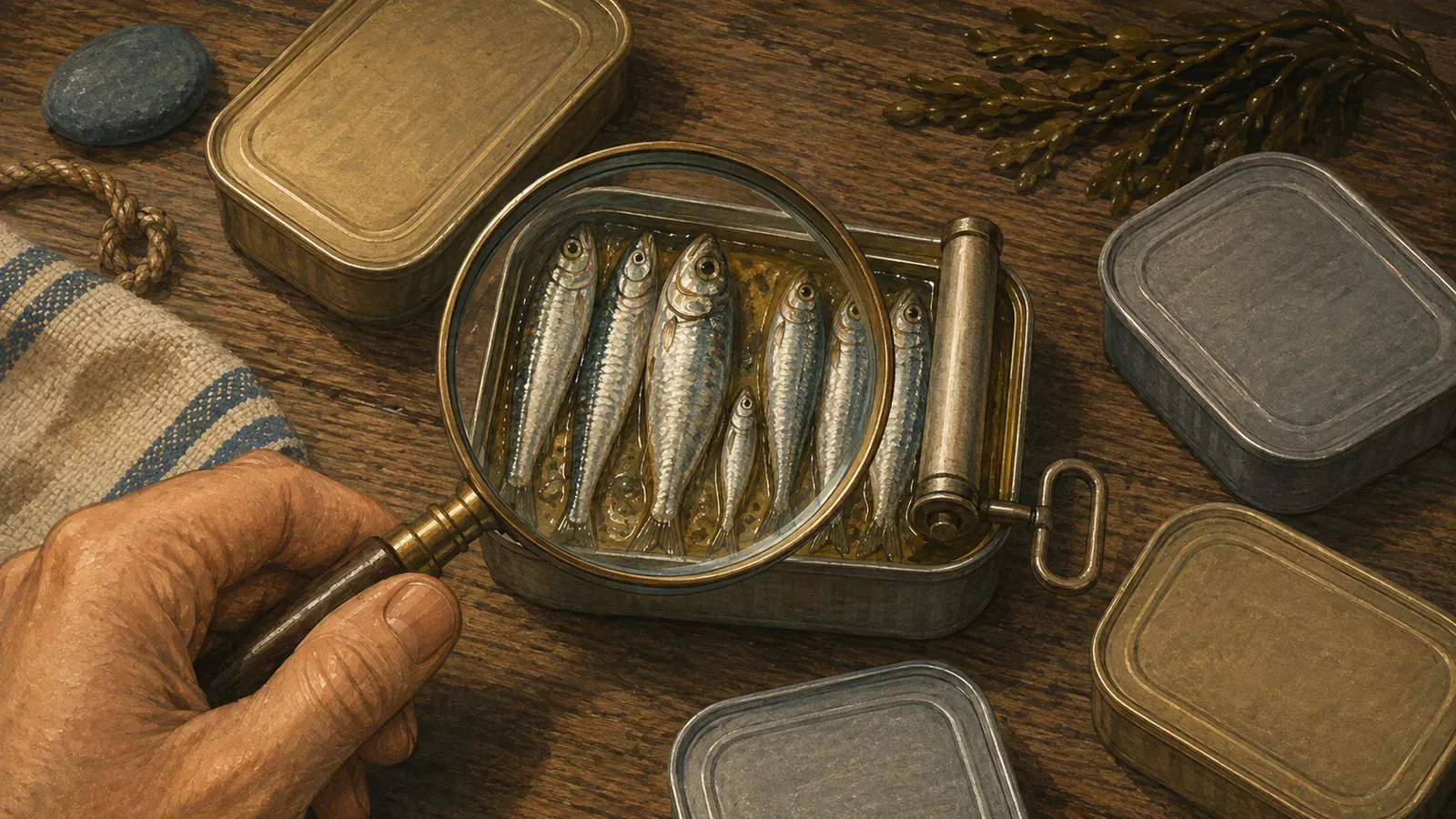
Probably yes — but not the way you think. "Sardine" is not a species. It is a legal category, and the international standard that governs it admits about twenty-two different fish, from the Atlantic pilchard to Baltic sprats to Peruvian anchoveta. Your Portuguese tin is almost certainly the true Sardina pilchardus. Your Norwegian brisling is a sprat wearing the name with full legal permission. Your Philippine tin is a Sardinella that only joined the official list in 2024. None of this is a scandal — nearly all of it is written into law — but it is the single most misunderstood fact in the tinned-fish aisle. Here is what is actually in your tin, brand family by brand family, and how to read the label like a taxonomist.
Once a fish has been beheaded, cooked, and packed in oil, no shopper on earth can identify its species by looking. Regulators know this. So does the industry. That gap between what the eye can check and what the label claims is why "sardine" became one of the most carefully lawyered words in food — argued over at the UN's food-standards body, litigated all the way to the World Trade Organization, and still, decades later, meaning something different on each side of every ocean.
We run a directory of 100+ sardine brands from 30+ countries, with a species record behind every tin we can verify. This piece is the map of the whole question: the law, the fish, the brand families, and the label. The short version is reassuring. The long version is much more interesting.
"Sardine" is a category, not a species
Start with the document everyone in this story argues about: Codex Stan 94, the FAO/WHO international standard for canned sardines and sardine-type products. It does two things at once.
First, it reserves the naked word. Under the standard, the name "Sardines" — unqualified, nothing before it — belongs exclusively to Sardina pilchardus, the European sardine, the fish of Portugal, Morocco, Brittany, and the Mediterranean. There is exactly one true sardine, and the law knows which one it is.
Second, it opens a side door and holds it wide. A list of other small pelagic species may be sold as "X sardines," where X names a country, a region, the species, or its common name. That list ran to twenty-one species for most of the standard's life — the whole Sardinops genus of the Pacific, five Sardinella species of the tropics, the Atlantic herring, the European sprat, and even three anchovies — and grew to about twenty-two in November 2024, when Sardinella lemuru, the fish in most Philippine tins, was formally added.
So the honorific "sardine" works like the word "champagne" would if the law also allowed "Californian champagne," "Pacific champagne," and "sparkling-type champagne of the genus Prosecco." One protected original; a legally chartered extended family.
The fish that went to court
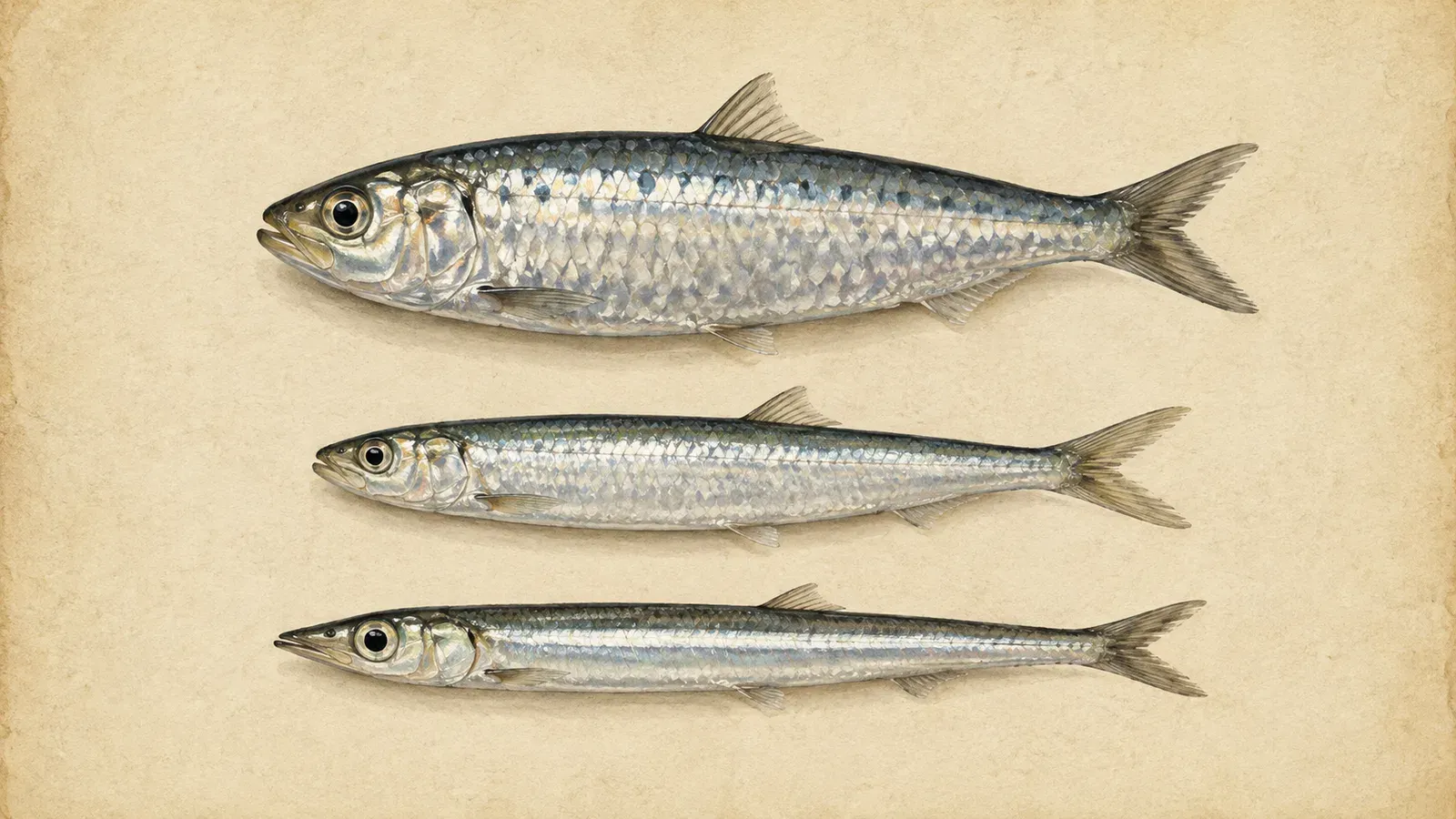
If you doubt how much money rides on one word, consider that "sardine" has its own WTO dispute. In 2001 Peru filed a complaint against the European Communities, whose 1989 regulation said that only Sardina pilchardus could be marketed in Europe as preserved sardines — full stop. Peru's Pacific catch, Sardinops sagax, could not use the word at all, even qualified. Peru pointed at the Codex standard, which explicitly permits "Pacific sardines," and argued Europe was ignoring the international rulebook it had helped write.
Peru won. The panel ruled in May 2002, the Appellate Body upheld it that September, and by mid-2003 the parties had settled and the EU amended its regulation. The result is the two-tier system Europe still runs: the unqualified name stays reserved for S. pilchardus, while twenty-one listed "sardine-type" species may be sold with a trade description joining "sardines" to the scientific name and catch area. A tin of Sardinops in a Berlin supermarket is legal — as long as the Latin is on the label.
It is worth pausing on what the case was really about. Nobody disputed what was in the Peruvian tins. The fight was over whether a fish caught off Callao could borrow the prestige of a name built by Breton and Portuguese canners over 150 years. That is the entire sardine question in miniature: not fraud, but the economics of a word.
Two continents, two rulebooks
In the EU, the regime is strict and readable. Unqualified "sardines" means Sardina pilchardus, prepared from that species exclusively. Everything else on the approved list is a "sardine-type product" and must carry the qualifier. This is why the same Latvian factory ships tins labeled "sprats" to Berlin — and why the strong pages in our directory, like Brīvais Vilnis, state plainly that Riga sprats are Sprattus sprattus. European law also gives fresh and frozen fish a full identity card — commercial name, scientific name, catch method, FAO fishing area — though canned fish sits under the older sardine-specific standard, which is why catch-area printing on tins remains partly voluntary. The best canners do it anyway.
In the US, the word is roomier. American practice, following the FDA's market-name conventions and a century of Maine cannery tradition, lets small herring and sprat travel as "sardines." The historic Maine sardine — Underwood and a hundred vanished canneries — was juvenile Atlantic herring, Clupea harengus, and perfectly legal. Today, several everyday American supermarket sardines are sprat: Beach Cliff tins, packed in Poland, list sprat right on the ingredient panel. That is not a trick; it is the label doing its job. The premium end of the US market plays the same game openly — "brisling sardines" from King Oscar and Crown Prince is simply the Norwegian word for sprat, worn with pride since 1902.
The practical consequence: an American shopper's default "sardine" may be a sprat or a herring, while a European shopper's is the true sardine — and both tins are telling the legal truth.
Brand family by brand family: what is actually in the tin
Here is the aisle, sorted by what our species verification work across the directory actually found. Every family below is labeled legally in its home market.
| The tin says | The fish usually is | Legal status | What to know |
|---|---|---|---|
| "Sardines," packed in Portugal, Spain, France, Croatia | Sardina pilchardus | The reserved name, correctly used | The benchmark. EU law requires this species for the unqualified name — Nuri, Pinhais, Ramirez, Ortiz, La Belle-Iloise and their peers are the real thing by legal definition |
| "Sardines," packed in Morocco | Sardina pilchardus | Correct use of the reserved name | Same true sardine, colder-current Atlantic waters — see below; the world's supply leader |
| "Brisling sardines" (King Oscar, Crown Prince) | Sprattus sprattus — the European sprat | Legal in the US under Codex-style qualified naming | A different genus. Smaller, softer, often smoked. Sold in the EU as sprat/brisling, not as unqualified sardines |
| "Sprats" / "Riga sprats" (Brīvais Vilnis, Gamma-A, Karavela) | Sprattus sprattus; some large-format lines are Baltic herring | Labeled as exactly what they are | The Baltic tradition never claimed the sardine name — Riga canners were told in the 1890s their "Russian sardines" wouldn't sell, and renamed them sprats |
| US supermarket "sardines" packed in Poland (e.g. Beach Cliff) | Sprattus sprattus, per the ingredient list | Legal under US market-name practice | The name is American custom; the ingredient panel tells the truth |
| Historic "Maine sardines" (Underwood) | Juvenile Clupea harengus — Atlantic herring | Legal for a century | The original American sardine was always a small herring |
| "Wild Pacific sardines" (Wild Planet and peers) | Sardinops sagax | A true Codex sardine, correctly qualified | The species Peru went to the WTO for. The US West Coast fishery has been closed since 2015; Pacific supply now comes from elsewhere |
| "Sardines," Philippines (555, Ligo, Mega and peers) | Sardinella lemuru | Codex-listed as of November 2024 | The Bali sardinella dominates the Zamboanga fishery; 555's own materials confirm the species |
| "Sardina" / "Peruvian sardines," Peru | Engraulis ringens — the anchoveta | Marketed under a recognized culinary name | Peru's true Sardinops fishery collapsed after the 1997–98 El Niño and never recovered; the anchoveta, an anchovy, inherited the tin |
| "Sardina común," Chile | Strangomera bentincki | On the EU's approved sardine-type list | A Chilean herring relative, listed in the law alongside the anchovies |
| "Sardines," India | Sardinella longiceps — the oil sardine | Codex-listed | The great Malabar fishery; a true sardinella |
Read the table twice and a pattern emerges. Where the fish is not Sardina pilchardus, the label almost always discloses it — in the qualifier, the ingredient list, or the Latin name. The system mostly works. The confusion lives not on the tin but in the shopper's assumption that "sardine" names one fish.
Morocco: the benchmark, by the numbers
If the true sardine has a capital, it is not Lisbon — it is Safi. Morocco produces roughly half the world's canned sardines and is the leading exporter, shipping to some 100 countries; its sardine catch runs around 850,000 tonnes a year, and the Safi industrial zone alone handles about 30% of it. The species is Sardina pilchardus, the same fish as Portugal's, taken from the cold upwelling waters of FAO area 34 along the Atlantic coast. The UK buys about 60% of its canned sardines from Morocco.
This matters for the label question in a quietly useful way: a great many tins around the world that say "Moroccan sardines" — including US brands like Season and the Moroccan skinless-and-boneless lines of premium Norwegian and American labels — are the true sardine, correctly named. Moroccan origin is, statistically, one of the strongest "yes, it is actually a sardine" signals on the shelf. The full supply chain, from purse seine to retort, is laid out in how sardines are canned.
The actual fraud, measured
So far, everything described is legal labeling. What about real mislabeling — the tin that claims one species and contains another?
It exists, but the headline numbers belong mostly to other fish. Oceana's landmark DNA survey of US seafood — 1,215 samples across 21 states — found 33% mislabeled overall, with the fraud concentrated where the margin is: snapper (87% wrong) and tuna (59%). Cheap, abundant small pelagics are a far less tempting target than a $30 fillet. The sardine's problem is the opposite of the snapper's: not an impostor sold at a premium, but a family of legal names doing quiet work on the shopper's assumptions.
Where sardine-specific substitution does show up is in processed products in loosely regulated markets, and researchers take it seriously precisely because canning erases the evidence: "morphological changes during processing make visual verification impossible," as the authentication literature puts it. Food scientists have built DNA sensors that can flag as little as 5% substitution of Sardina pilchardus with the cheaper round sardinella in cooked, canned material — technology that only exists because the swap cannot be caught any other way. Our own directory research reached a matching conclusion for one market in particular: DNA studies of Chinese-market sardine products found so much species diversity that we assign Chinese OEM tins no species at all without SKU-level evidence.
For the shopper in a US or EU supermarket, the fair summary is this: outright species fraud in name-brand canned sardines is rare, the legal-but-surprising kind is everywhere, and the difference between the two is the whole reason to learn the label.
How to read the tin
Five checks, in order of power. They take fifteen seconds.
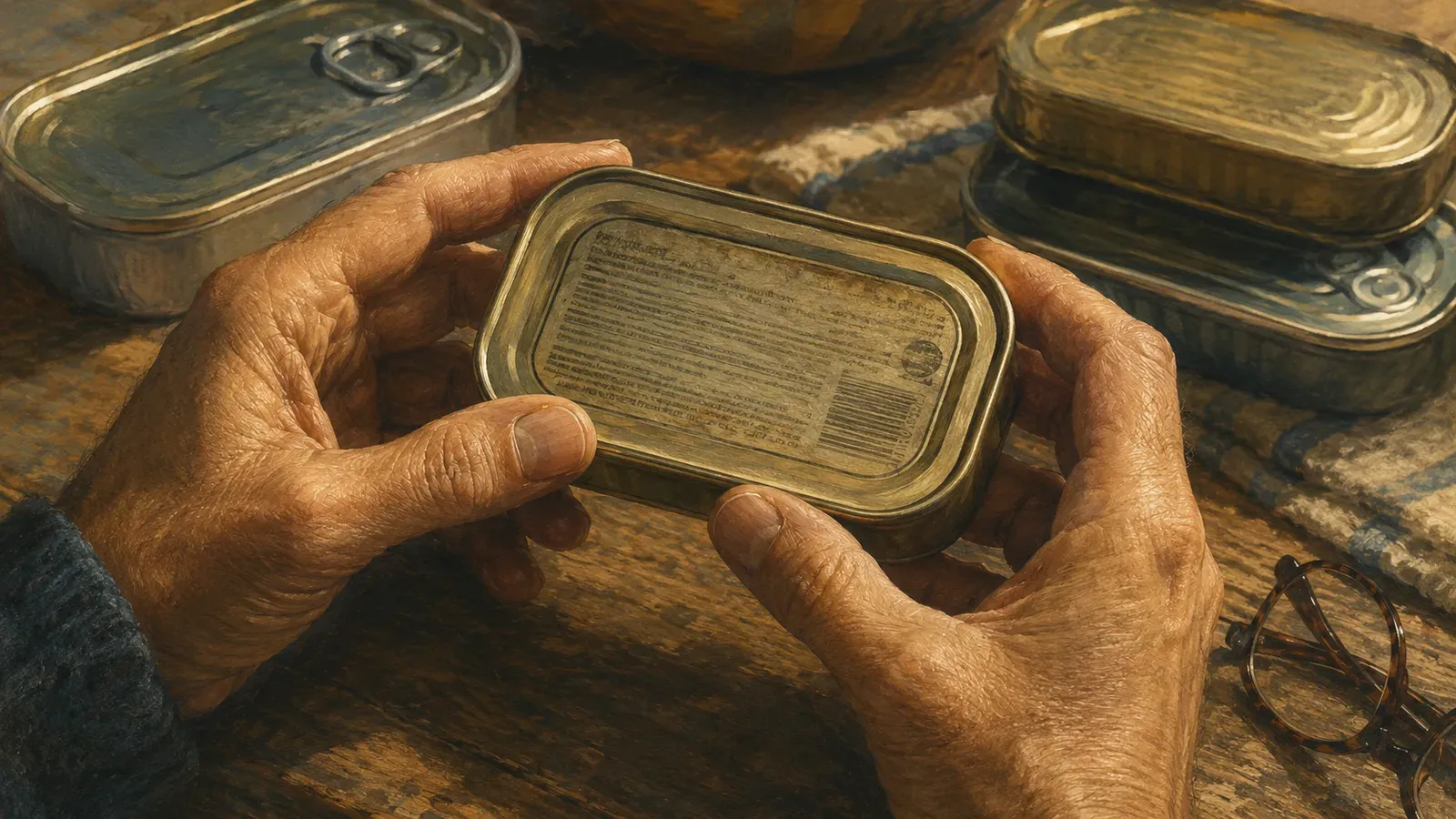
1. Find the Latin name. This is the master key. EU rules require the scientific name on sardine-type products, and quality canners worldwide print it voluntarily. Sardina pilchardus is the true sardine; Sprattus is a sprat; Sardinella and Sardinops are the legitimate cousins; Engraulis is an anchovy; Clupea is a herring. No Latin anywhere is not proof of anything — US labels often omit it — but its presence ends the investigation.
2. Read the noun before "sardines." "Brisling sardines" tells you sprat. "Pacific sardines" tells you Sardinops. "Portuguese sardines" or "Moroccan sardines" tells you pilchardus. Under Codex logic, that qualifier is the disclosure — it is doing exactly what the law designed it to do.
3. Cross-check the packing country. A tin packed in the EU and labeled plain "sardines" is Sardina pilchardus by legal requirement. Packed in Poland or the Baltics, expect sprat. Packed in the Philippines, expect Sardinella lemuru. Packed in Morocco, expect the true sardine. The species map of our entire directory does this lookup for every brand we cover.
4. Look for waters. A named catch area — "Northeast Atlantic," "FAO 27," "FAO 34" — is voluntary on most canned fish, which makes it a strong signal when present: canners specific about where are usually specific about what. FAO 27 is the Northeast Atlantic (Iberia, Brittany, the North Sea); 34 is the Eastern Central Atlantic (Morocco); 37 is the Mediterranean; 87 is the Southeast Pacific (Peru and Chile).
5. Let the price testify. True pilchardus, hand-packed in olive oil, has a cost floor. A very cheap tin is not a scam — it is usually a different, correctly disclosed fish or a different packing method. Our ranking of the best canned sardines notes the species behind every pick, and the budget tiers are where the family tree gets widest.
The fifteen-second version: Latin name first, qualifier second, packing country third. "Sardines" packed in the EU or Morocco is the true fish by law. "Brisling," "sprats," or a Baltic address means Sprattus. A Philippine tin is a Sardinella. All of them are legal; only one of them is Sardina pilchardus.
Does it actually matter?
Nutritionally, less than you would hope, given how much law we just covered. Sprat, herring, sardinella, and true sardine are all small, short-lived oily fish — dense in omega-3s, eaten bones-in, low on the food chain, low in mercury. The sardine-curious internet currently eating a tin a day for health is getting roughly the same deal whichever cousin is inside. Anyone who tells you brisling is a downgrade has not had good Riga sprats.
Gastronomically, it matters a great deal. The true sardine is a firmer, fuller-flavored, meatier fish; a sprat is smaller, softer, and takes smoke beautifully; a sardinella in tomato sauce is its own genre; the anchoveta is a different family with a different soul. These are not better and worse — they are different tins for different jobs, and knowing which fish you are holding is the difference between a pantry and a collection.
And for the health of the market, it matters most of all. A shopper who knows that "sardine" is a category rewards the canners who disclose — the Latin name printed unprompted, the catch area named, the sprat called a sprat. That is the economy we want more of, and it is the standard we hold every entry in our brand directory to: species stated where verified, and "not publicly stated" written plainly where it is not.
So: is your sardine actually a sardine? Turn the tin over. It has been telling you all along.
A note on the labels above: the rules summarised here are the published Codex, EU and US standards; individual product labels govern. No brand named on this page is accused of breaking any law — nearly everything surprising about the word "sardine" is entirely legal.
Sources & further reading
- FAO/WHO Codex Stan 94 — Standard for Canned Sardines and Sardine-Type Products (species list and naming rules)
- Council Regulation (EEC) No 2136/89 — marketing standards for preserved sardines and sardine-type products (as amended)
- WTO DS231 — European Communities: Trade Description of Sardines (Peru's complaint, rulings, 2003 settlement)
- Business Companion — fish labelling requirements (commercial designation, scientific name, FAO catch areas)
- Oceana — nationwide seafood fraud study (1,215 DNA-tested samples, 33% mislabeled)
- Global Seafood Alliance — DNA sensors for sardine species authentication (S. pilchardus vs S. aurita, 5% detection threshold)
- Infobae — the collapse of Peru's Sardinops fishery (IMARPE landings data, 1997–98 El Niño)
- Peruvian anchoveta (Engraulis ringens) — fishery scale and "Peruvian sardines" marketing
- Latvijas Sprotes — history of Riga sprats (the "Russian sardines" renaming, 1890s)
- Morocco World News — Morocco's share of world canned sardine production and exports
- NOAA Fisheries — Pacific sardine (Sardinops sagax): market names and 2015 fishery closure
- Sardines.World directory species-verification records — per-brand species evidence across 100+ brands, 30+ countries (methodology and confidence tiers on our species pages)
Frequently asked questions
Are brisling sardines real sardines?
Legally yes, biologically no. Brisling is the Norwegian name for the European sprat, Sprattus sprattus — a different genus from the true sardine. The international Codex standard and US practice both allow sprat to be sold as "brisling sardines," which is why King Oscar and Crown Prince can print the word on the tin in full compliance. In the EU, the same fish must be sold as sprat or brisling, not as unqualified "sardines."
What is the difference between sprats and sardines?
They are different fish from different genera. The true sardine (Sardina pilchardus) is a warmer-water Atlantic and Mediterranean species that grows to 20 cm or more; the sprat (Sprattus sprattus) is a smaller, colder-water fish from the North Sea and Baltic. In the tin, sprats are usually smaller, softer, and often smoked — the famous Riga sprats are Baltic Sprattus. Both are nutritious oily fish; only one is a sardine in the strict sense.
What fish is actually in canned sardines?
It depends on where the tin was packed. European tins labeled simply "sardines" must be Sardina pilchardus by law. American supermarket sardines are often sprat or herring, legally sold under the sardine name. Philippine tins are almost always Sardinella lemuru, Indian tins are Sardinella longiceps, and Pacific tins are Sardinops sagax. All of these are permitted "sardine-type" fish under the international Codex standard.
Are sardines and anchovies the same fish?
No — they belong to different families. Sardines and sprats are herrings (Clupeidae); anchovies are Engraulidae, with a distinctive long snout and huge mouth. The confusion is real, though: Peru's anchoveta (Engraulis ringens) is canned and marketed as "Peruvian sardines," and the Codex standard permits three anchovy species inside the sardine category. Cured salty anchovy fillets are a different product entirely.
How can you tell what species is in a sardine can?
Look for the Latin name first — EU rules require it on sardine-type products, and good canners print it anyway. Then check the packing country against the label word: "sardines" packed in the EU means Sardina pilchardus; "brisling" or "sprats" anywhere means Sprattus sprattus. A catch area or FAO zone (27 is the Northeast Atlantic, 34 is Morocco's coast) is a bonus signal. If the tin names no species and no waters, the price usually completes the story.